The Plan Behind the 3:15

The first time Maddie really misjudged her running pace, it was Chicago.
Sixteen weeks of training had gone into that day - early mornings, long runs, consistency and discipline. Her race day fueling plan wasn't ready and the race turned painful early. She finished well off her goal time, and it stung.
The harder problem was one she didn't realize until later. In a marathon, your pace per mile - your splits - have to be almost surgically consistent. A few seconds off in either direction compounds across 26.2 miles into minutes you can't get back. The pace that felt steady on her hilly San Francisco routes meant something different on Chicago's flat asphalt, and she'd guessed wrong on the conversion.
This time would be different. She had a coach who already knew her entire history, without any setup.
Two years and a few marathons later, she had a new number to chase: 3:15, the time she needed to qualify for the Boston Marathon with a safe buffer. The course was again flat and net-downhill. The same conversion problem was waiting for her.
This time she didn't guess. She asked Littlebird.

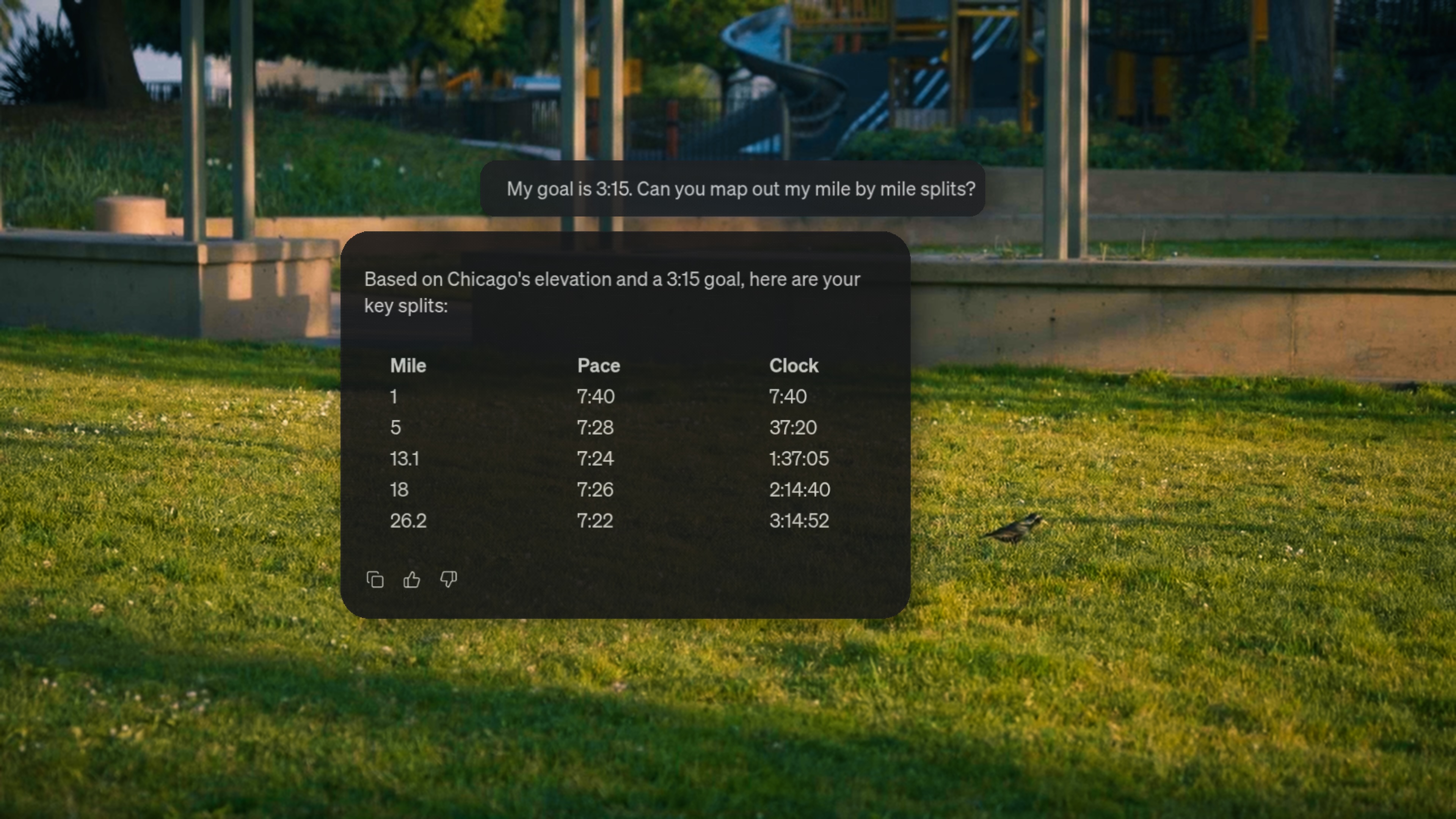
She didn't paste in the course profile. She didn't re-type her recent run history. She didn't explain that she lives in San Francisco but the race was elsewhere. Littlebird had been quietly building context from the things she was already doing - the registration email in her inbox, the training plan open in another tab, the elevation map she'd pulled up the week before. By the time she asked, the picture was already there. A short, half-thought question was enough to get back a mile-by-mile training plan, adjusted for the terrain.
"I asked it one question and it knew everything else. I didn't have to re-explain my life."
The pace plan was the headline, but it wasn't the only thing. Across the sixteen weeks, Littlebird filled in the smaller decisions she didn't want to keep making from scratch: what to eat the night before a long run, when to take her last real meal before a 5 a.m. start, how many recovery days a peak week actually needed. A steady second opinion, in the background, that knew her training block as well as she did.
When race day came, she turned the mile-by-mile plan into a phone lock screen so she could glance at it mid-race without unlocking. The numbers held.
Then she did the same thing for her partner.
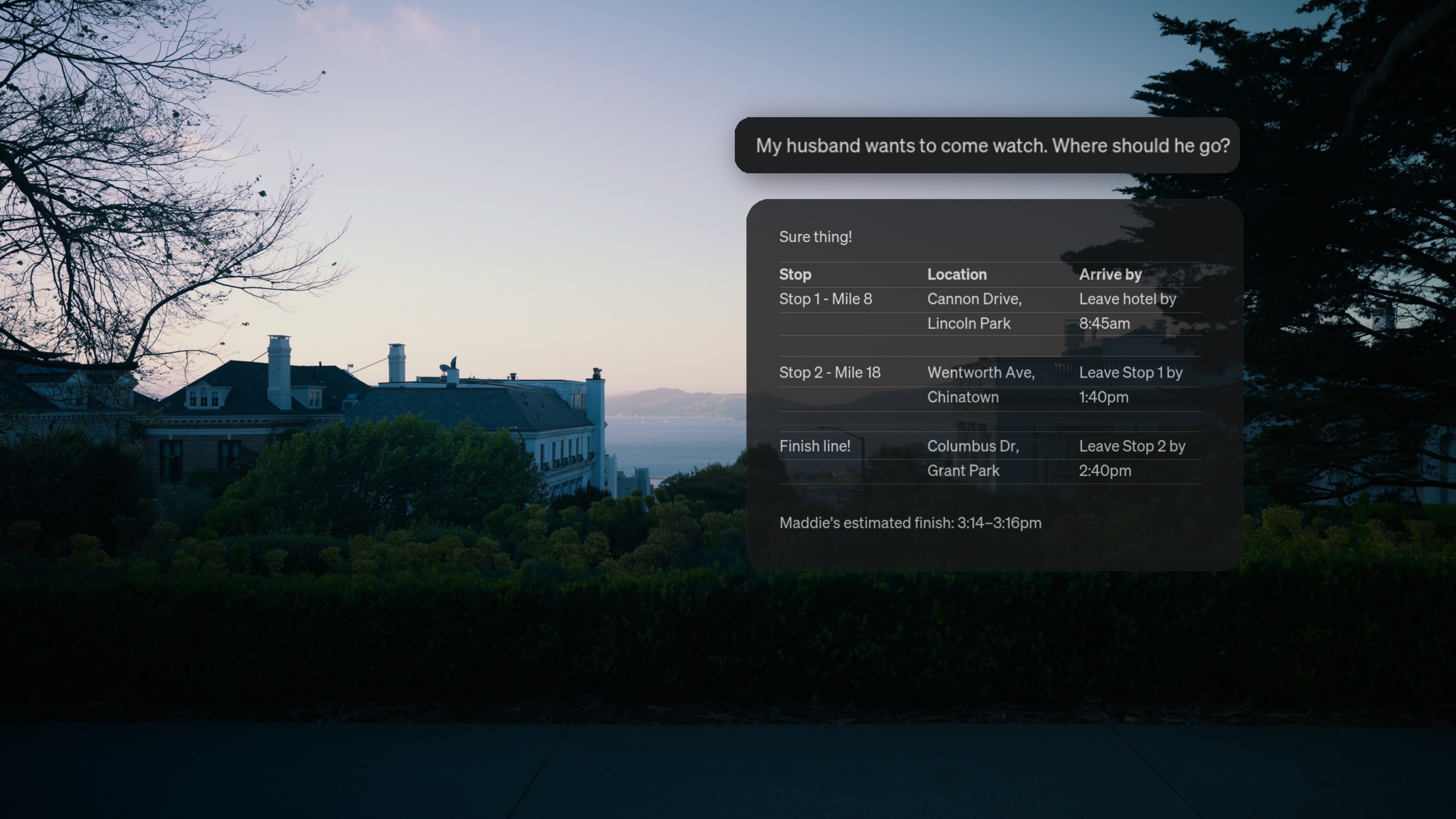
Neither of them had been to the area, and it was a point-to-point course - catch her at mile one, get stuck behind her in traffic, miss the rest. He asked Littlebird where to stand. It turned her race plan into a game day plan for him: the best places to spectate, exactly where she'd be and when, with addresses, parking, and how much lead time he needed. Mile 8, mile 18, the finish. Mile 13 wasn't reachable in time given her pace, so it told him to skip it.
He made all three. He was right every time, because Littlebird was.
"As soon as I crossed the finish line, I just heard, 'Maddie!' I looked to my left, out of breath, finally stopped, and he's like, 'You did it. You hit your time.'"
She qualified. Boston is in 2027.
.jpg)